
Snowloading
Overview
This article explains snow loading considerations for SteelX buildings in alpine and sub-alpine regions of Australia. It describes relevant altitudes, load thresholds, and when to refer designs for additional engineering.
Why This Is Important
- Ensures buildings are engineered to withstand expected snow loads.
- Reduces the risk of structural failure in snow-prone areas.
- Clarifies when special engineering input is required.
How to Understand Snowloading Requirements
1. Snowload in Wind Regions A
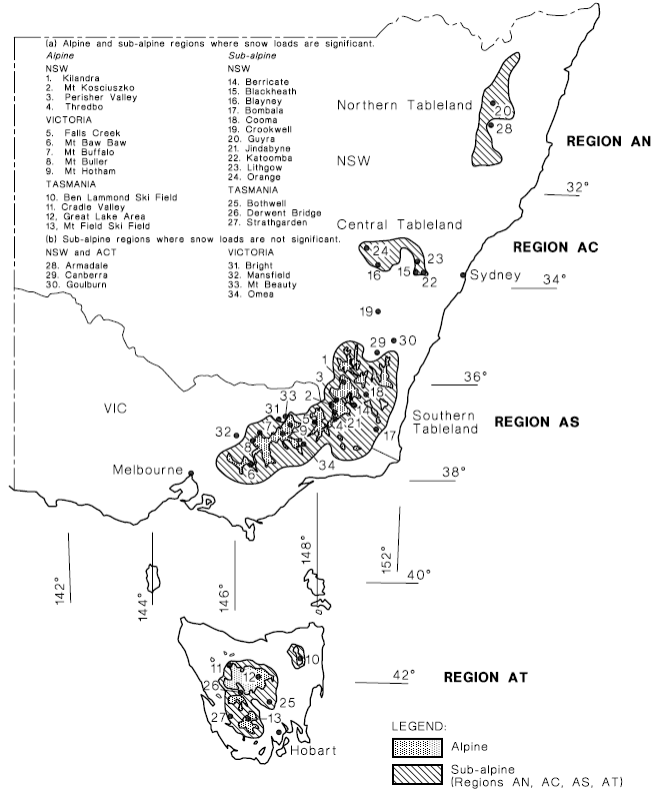
Snow A – Snowload is present within Wind Regions A. Alpine and sub-alpine regions are defined by altitude:
2. Australian Regions and Altitudes
Australian Northern (AN)
- Northern Tablelands of New South Wales
- Sub-alpine: all altitudes above 600 m
Australian Central (AC)
- Central Tablelands of New South Wales
- Sub-alpine: all altitudes above 600 m
Australian Southern (AS)
- Southern Tablelands, New South Wales
- Sub-alpine: 600 m – 1200 m
- Alpine: ≥1200 m
Australian Tasmania (AT)
- Tasmania:
- Sub-alpine: 300 m – 900 m
- Alpine: ≥900 m
3. Design Load Limits
- 1 kPA = 100 kg per square metre
- 2.5 kPA = 250 kg per square metre
- SteelX designs buildings up to 2.5 kPA in sub-alpine regions.
- If higher loading is required, the shed design must be referred to SCE for additional engineering.
4. Alpine and Sub-Alpine Definitions
- Alpine areas:
- ≥1200 m AHD in NSW, ACT, and Victoria
- ≥900 m AHD in Tasmania
- Sub-alpine areas:
- 600–1200 m in NSW, ACT, and Victoria
- 300–900 m in Tasmania
5. Snow Accumulation
- Sub-alpine regions:
- Average snow accumulation: 175 mm or greater
- Snow typically melts daily
- Alpine regions:
- Snow can accumulate daily, requiring designs to account for sustained loads.
Tips, Best Practices & Troubleshooting
- Always check the site altitude when quoting projects in snow-prone areas.
- Confirm whether expected snow loads exceed 2.5 kPA.
- If unsure, refer to Site Check Engineering before finalising a quote.
- Clearly explain snowloading considerations to customers to set expectations.
Related Resources
Request Engineering (Site Check)
Review & Updates
Version History:
- v1.0 – 11 April 2023
- v2.0 – 31 July 2025
Article Information
- Category: Engineering & Site Specifications
- Target Audience: Franchise Users, Estimators, Sales Coordinators
- Business Owner:
- Version: v2.0
- Last Reviewed: 31 July 2025