
Purlin Type
Overview
The Purlin Type function allows you to select the purlin option to be used as wall girts and roof purlins within a building design.
The two purlin types available in SMS are:
Top Hat (TH)
Z Purlin
⚠️ Important:
Only one purlin type can be used in a single building design.
For example, you cannot have Z purlins for roof purlins and Top Hat purlins for wall girts.
Roof purlins and wall girts must be the same purlin type, although size and thickness may vary depending on engineering requirements.
Refer to the Material Specifications Sheet for details on purlin dimensions and thickness for each design.
Why this is important
Ensures structural consistency throughout the building design.
Impacts cost efficiency and wind rating compliance.
Determines fastening methods, installation time, and durability.
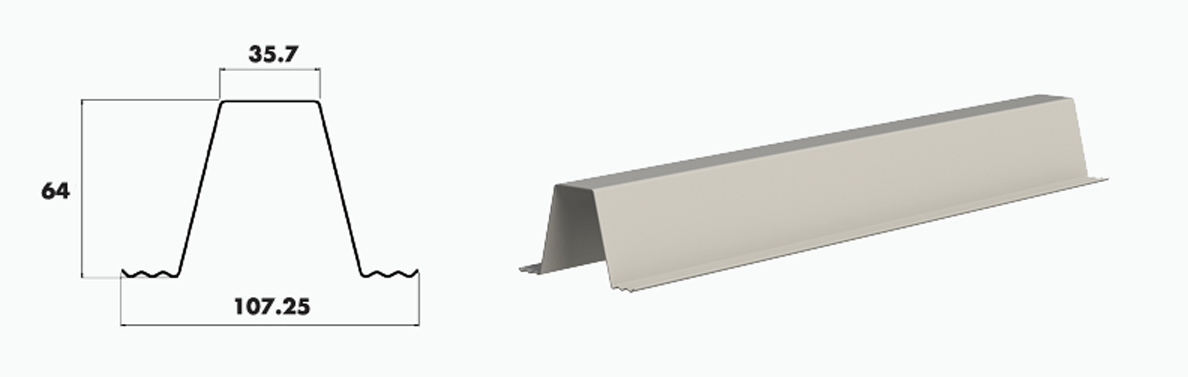
Top Hat (TH) purlins
Top Hat purlins are most commonly used for smaller buildings or where bay spacing is up to 4 m.
Typically uses TH64, meaning the purlin is 64 mm deep.
Ideal for light-duty applications and smaller spans.
Cost-effective option for general shed design.
When bay size increases beyond 4 m, it may be more economical to switch to Z purlins, particularly in higher wind classifications.
Z purlins
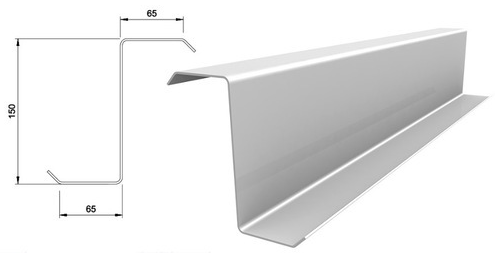
Z purlins are fully bolted to the portal frame, unlike top hats which are tech-screwed.
Named “Z” purlins due to their resemblance to the letter “Z”.
Mandatory in cyclonic regions, where higher structural strength is required.
-
SMS may automatically prompt you to change to Z purlins if your design includes features such as:
Gable infills
Cantilever lean-tos
Z purlins are available in multiple sizes and thicknesses, which vary according to the specific design and engineering requirements of the building.
Tips, best practices & troubleshooting
Use Top Hat purlins for smaller bays or low wind ratings to reduce material cost.
Use Z purlins for larger bays, cyclonic regions, or when higher structural rigidity is required.
If SMS prompts a purlin change, review the design wind speed and bay spacing before proceeding.
Check the Material Specifications Sheet for confirmation of size, profile, and gauge before ordering.
Related resources
Review & updates
Version history:
v1.0 – 19 April 2025
v2.0 – 6 October 2025
Article information
Category: Estimation View & Shed Design
Target audience: Estimators, SMS users, and design teams
Business owner:
Version: v2.0
Last reviewed: 6 October 2025